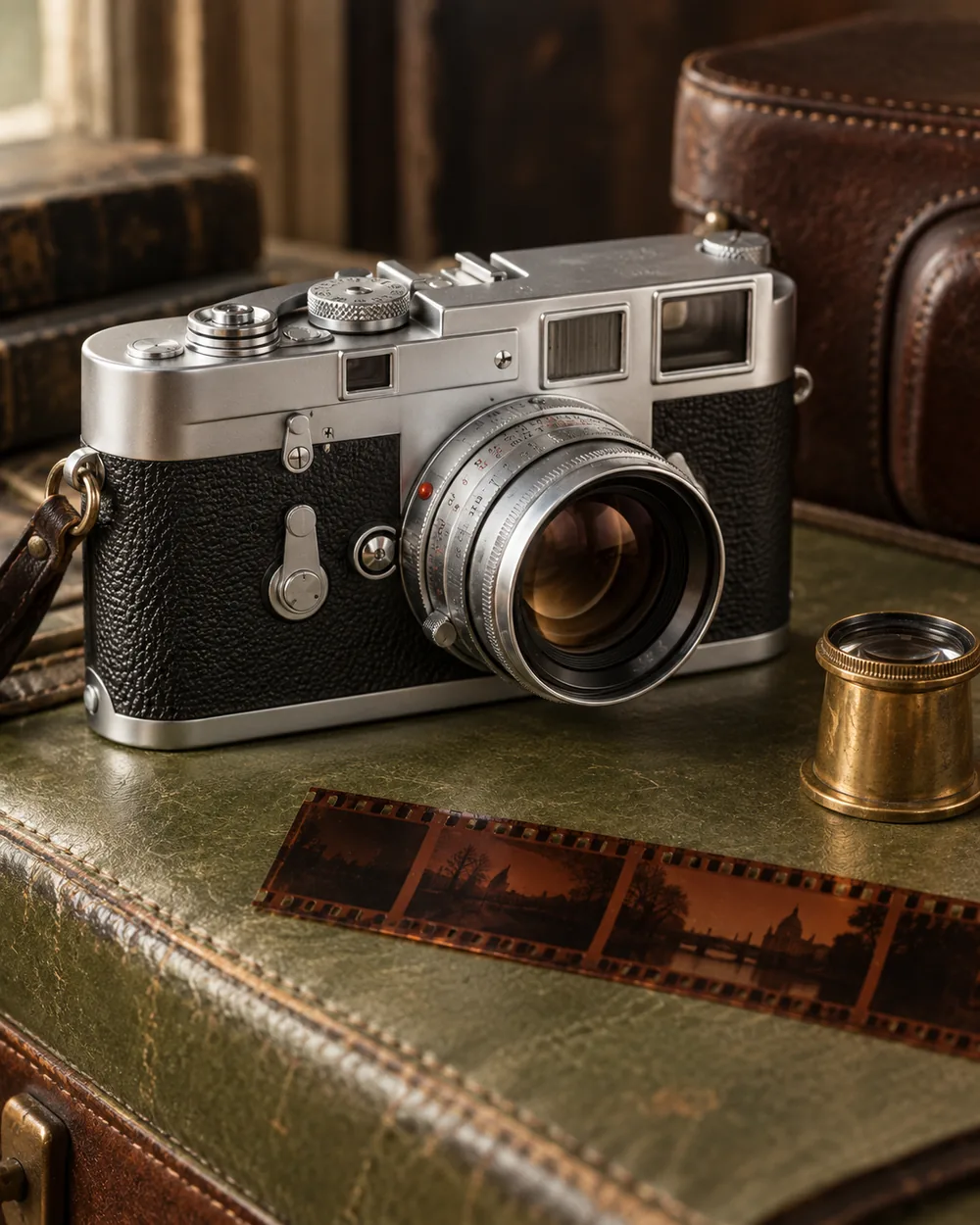
An object with a reason to exist
The Leica M3, Polaroid SX-70 and Rollei 35 are memorable in completely different ways. Each makes a strong visual promise about how a person will photograph. Beauty can come from simplicity, a successful folding mechanism, or extraordinary component density.
Good camera design is always a negotiation between optics, materials, price and the habits of the person behind the viewfinder. What looks eccentric decades later may have been an entirely sensible answer to a contemporary problem.
Three objects worth examining
Leica M3: Introduced in 1954, the M3 established the M system and an influential way of making 35mm photographs. Its lasting appeal is not just luxury; the viewfinder, controls and optical ecosystem form a coherent instrument.
Polaroid SX-70: The original SX-70 made the act of taking and sharing a photograph feel magical. Its elegant folding mechanism is collectible industrial design; working cameras still use compatible contemporary SX-70 film.
Rollei 35: The Rollei 35 is less a spy camera than a triumph of miniaturization. Its controls and collapsible lens invite an entirely different rhythm from later automated compacts.
Look beyond the auction photograph
Collector demand can turn a camera into an icon, but the original engineering often rewards closer examination. Focus on what the controls allow, what the mechanism compromises and how the user must adapt.
When a model is associated with a famous photographer, film scene or historical event, distinguish a verified connection to the camera type from provenance for a particular body. An ordinary example is not an original historical artifact just because it shares the same model number.
Where curiosity leads next
Choose one camera from the archive and read its inspection notes. Even if you never buy it, understanding the mechanism gives its surviving design a second life.
If you do decide to shop, use both current and completed marketplace searches, then verify exact variant, condition and accessories. The most fascinating camera can still be the wrong individual specimen.