One of the great film-camera modifications began with a simple refusal to fake eighteenth-century candlelit interiors. Stanley Kubrick and cinematographer John Alcott wanted low-light imagery of a kind that ordinary movie lenses could not record easily at the time.
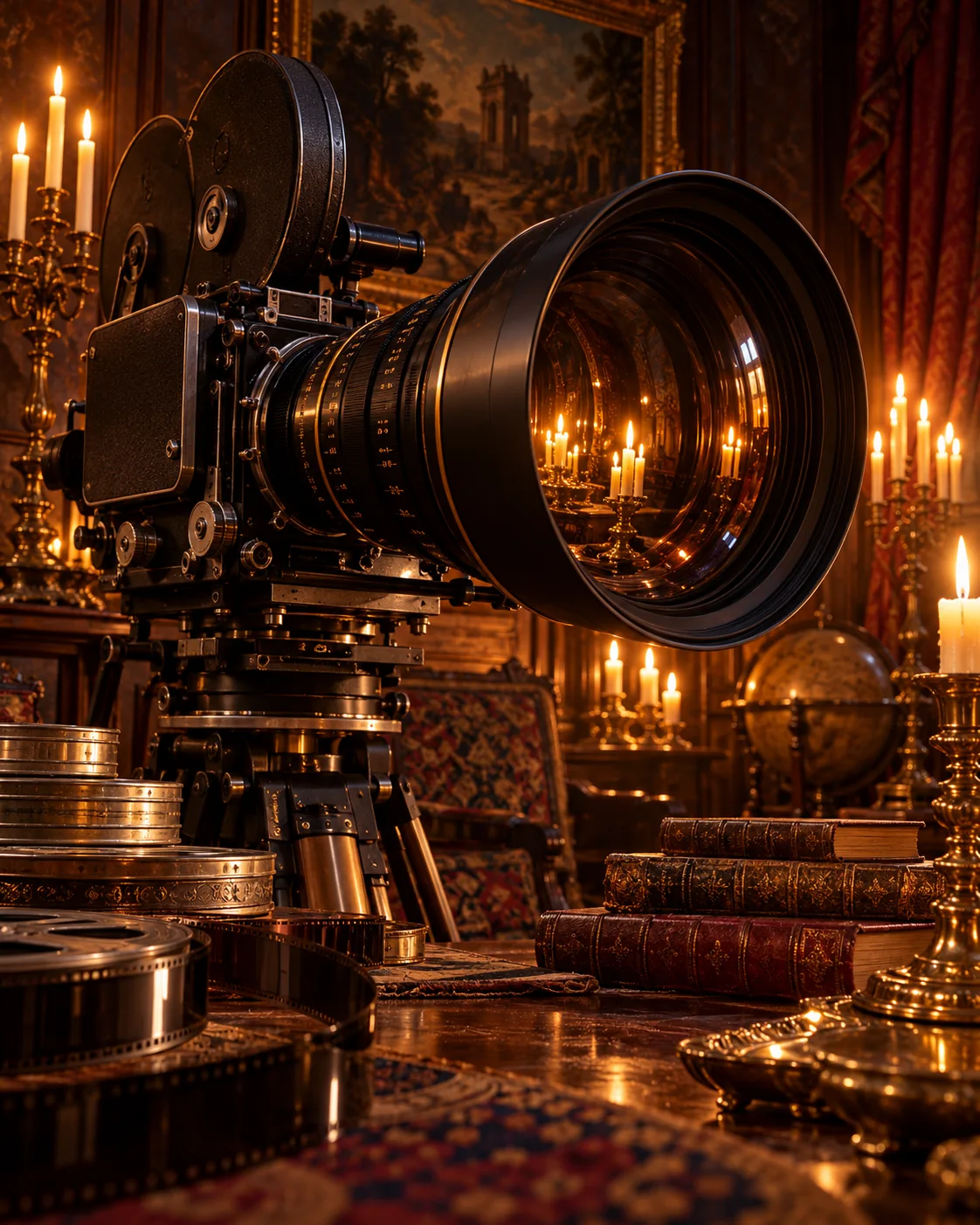
The solution was a non-reflex Mitchell BNC modified by Ed DiGiulio’s team to accept exceptionally fast 50mm f/0.7 Zeiss lenses made for an Apollo-related NASA photographic program. They had to modify the camera interior, shutter area and focusing mechanism to clear the unusually large rear optical element.
Additional adapters achieved a wider effective field of view. The remarkable result is often described as “shooting by candlelight,” but the stronger collector story lies in the exact camera body, lens modifications and the people who engineered them. The American Society of Cinematographers preserves those details.
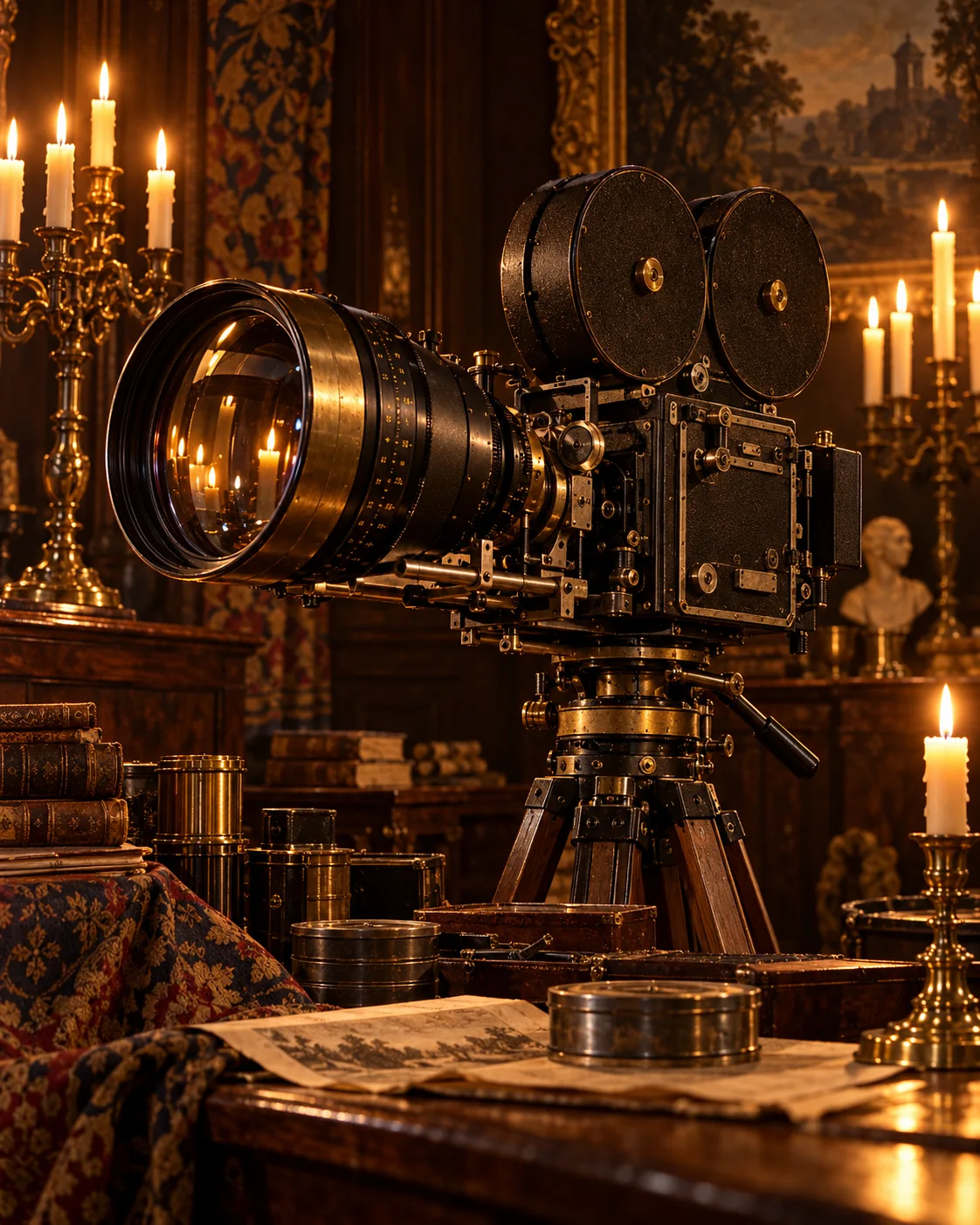
Connected cameras and equipment
- Modified Mitchell BNC + Zeiss Planar 50mm f/0.7 — Barry Lyndon by candlelight (1975)
- Zeiss 50mm f/0.7 + Kollmorgen adapter (36.5mm equivalent) — The wide candlelight lens (1975)
Sources and verification
We link to contemporary interviews, museum collections, manufacturer histories and specialist cinematography records when available. Historical camera attribution and an item being screen-used are different claims.