The first chapter is not a director brandishing a recognizable Leica. It is the Edison laboratory in New Jersey, where William Kennedy Laurie Dickson led much of the work that produced a practical motion-picture camera: the Kinetograph.
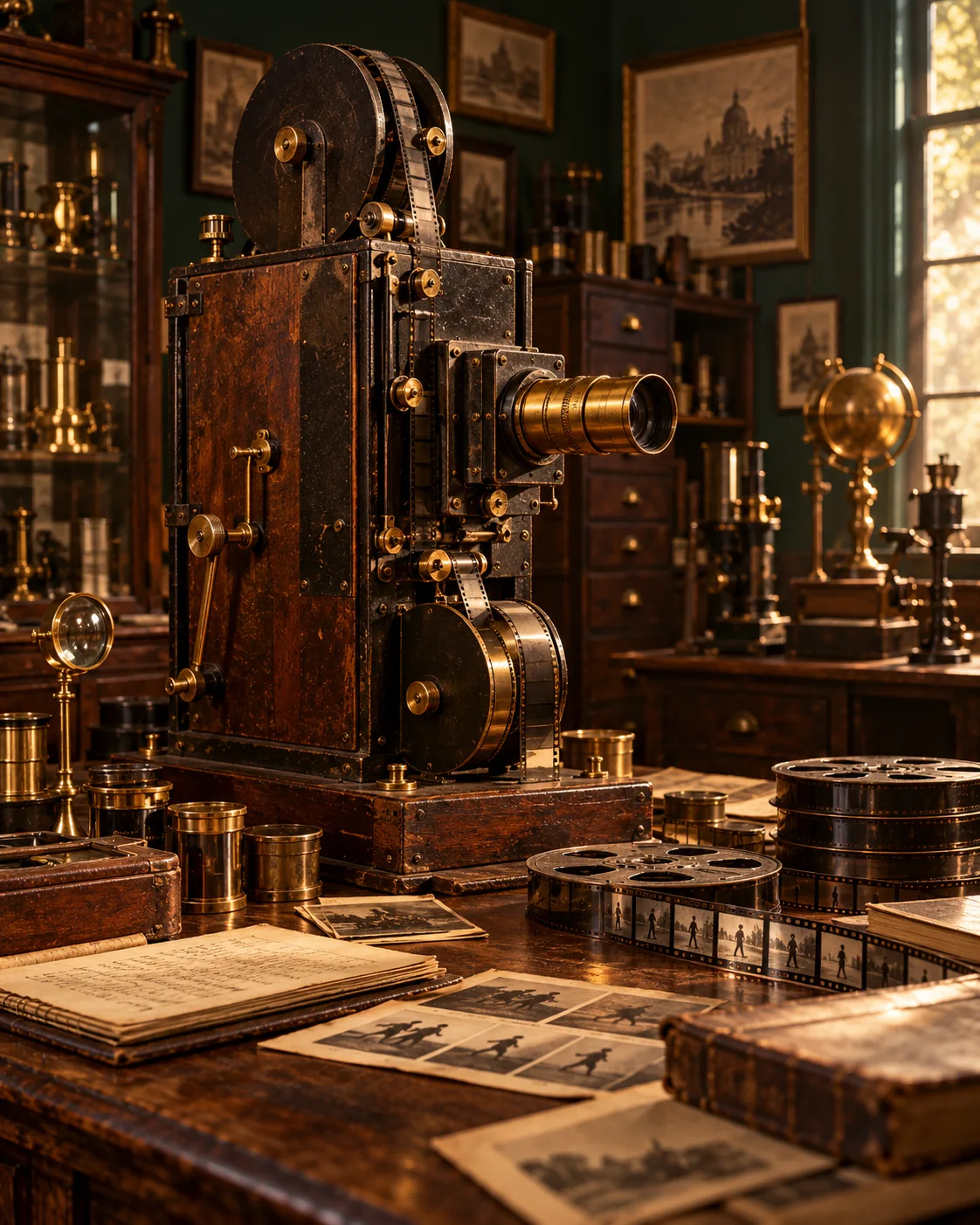
The team was trying to record successive images on perforated celluloid film. That recording apparatus was distinct from the Kinetoscope, a device intended to show the finished motion pictures to one viewer at a time. Confusing the two machines erases the role the camera played in this story.
The Black Maria, an early purpose-built studio, followed the sunlight. Its movable building and opening roof served the exposure needs of the time. The original camera is a historical research subject, not a modern item we can promise for sale.
Connected cameras and equipment
- Kinetograph — First Edison motion-picture tests (1891)
Sources and verification
We link to contemporary interviews, museum collections, manufacturer histories and specialist cinematography records when available. Historical camera attribution and an item being screen-used are different claims.